
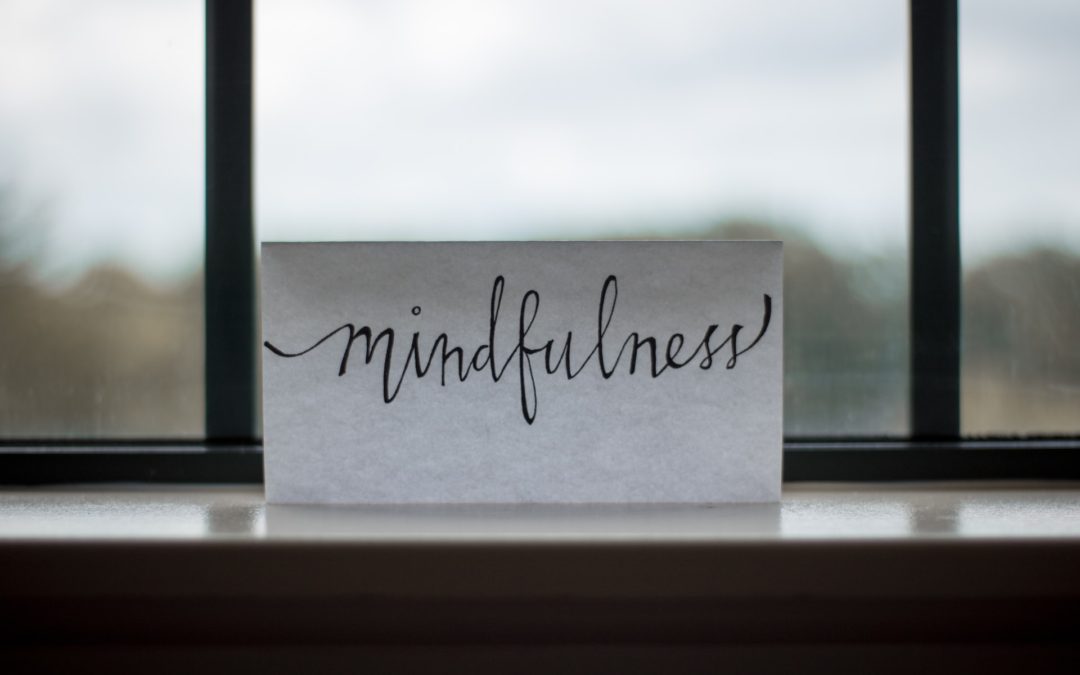
Mindfulness is the act of keeping your focus on the present moment. It’s not an easy thing to do and in fact so many of us are used to being busy all the time, that it’s almost uncomfortable to slow down enough to be mindful. Yet when you practice Mindfulness on a regular basis it can help to keep your anxiety level low.
Living in the Present
Being mindful means that you are paying attention to, and therefore living in, the present moment. Most of the time our minds are reaching forward to the future, and we often start to worry about things that are unknown, and/or things that could happen. Sometimes the opposite is happening and we let our minds reach back into past moments where we might be critical of ourselves for things we did, or said. We can also be critical of other’s behavior for things that were done to us.
Acceptance and Non-Judgment
Being mindful requires us to be accepting and non-judgmental about whatever is happening in the present moment. When we are critical of ourselves, others, or the environment, it rarely changes anyone or anything, but it certainly increases our anxiety level.
Focusing on the present moment takes practice. Like anything else, in order to get good at this, we must commit to repetitively doing mindful activities. When you focus on breath and being present with our body and how it’s feeling, it’s almost impossible to also be worrying about that situation that keeps your anxiety high. Yet clients will often give up too soon, or say “it’s not working” when in reality, they are not allowing themselves to just focus on breath and the sensations of their body.
Yoga and Tai Chi
My morning routine combines Yoga with Tai Chi as a means of focusing on the present. I’m very consciously aware of any painful sensations and or discomfort in my body during this practice. Breath is often the only way to work through those sensations. The more I focus on my breath and moving fluidly through movements with mindfulness of my body, the more present I am. I highly recommend Yoga or Tai Chi as a means for getting into more of the mindful space. For those of us that find just sitting without activity too anxiety provoking, these practices can help bridge the gap between mindfulness and anxiety.